Restructuring Product Architecture to Unlock Growth
Role
Founding Product Designer
Company
Spotly (Previous AMA Career)
Project Timeline
4 weeks
Contribution
Product strategy, UX architecture, UI
Context
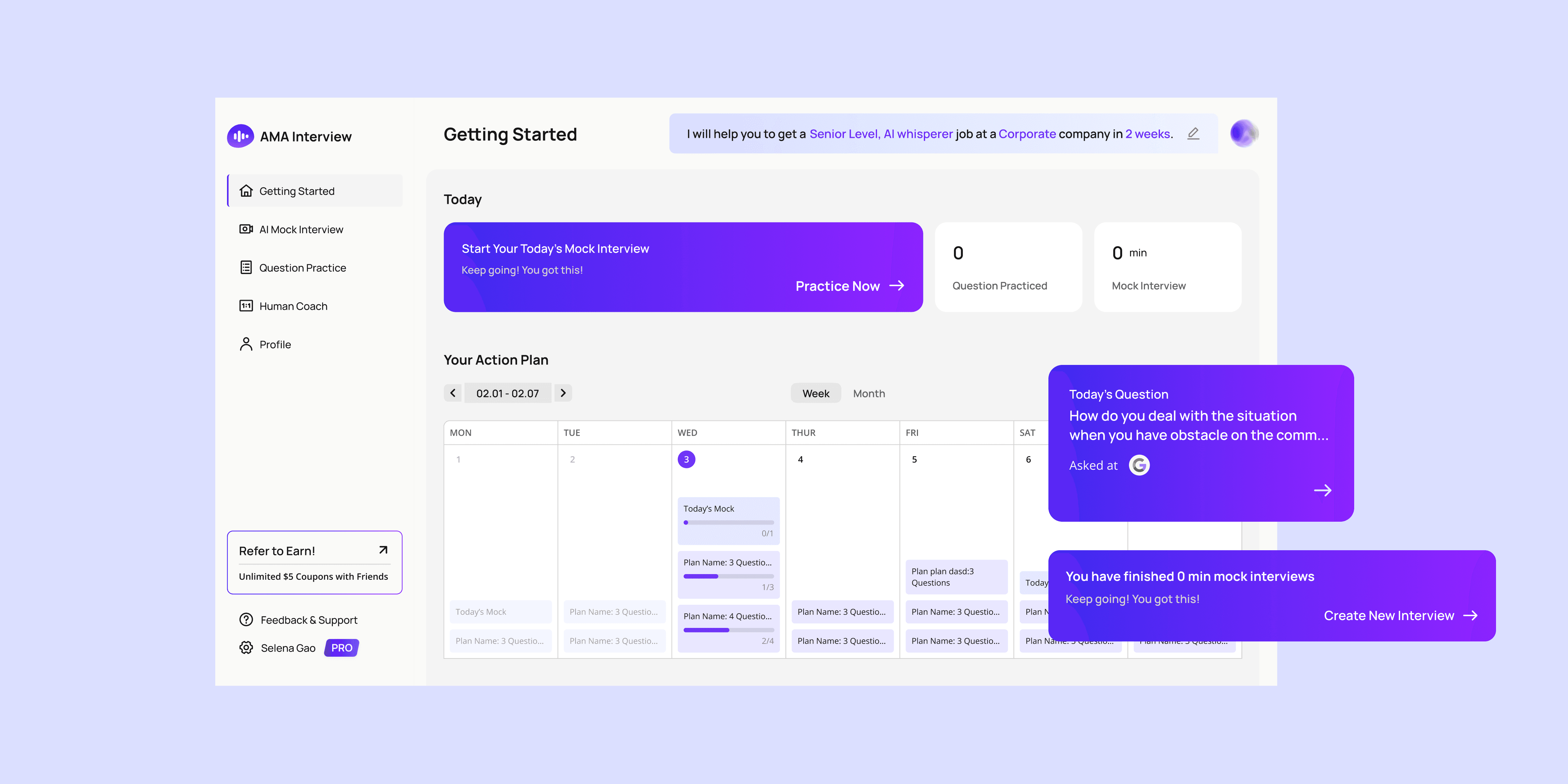
AMA Interview is an AI-powered interview prep platform offering mock interviews, practice questions, and coaching. As the product matured, traffic and engagement remained stable, but paid conversion plateaued at 2.9%. This indicated a structural inefficiency in the growth funnel.
Outcome & Impact — Quick View
Activation ↑
Mock Completion Rate: 35% → 60%+
Time to First Mock reduced by 45%
Monetization ↑
+58% Paid Conversion: from 2.9% to 4.59%.
Peak Daily Conversion: 11.11%
What We Saw from Existing Data
User behavior showed high dispersion but low commitment. Interaction was evenly spread across modules, yet 35% of users independently navigated to “Mock Interview” from the sidebar. The signal was clear: the product’s core value was strong, but its structure failed to amplify it.
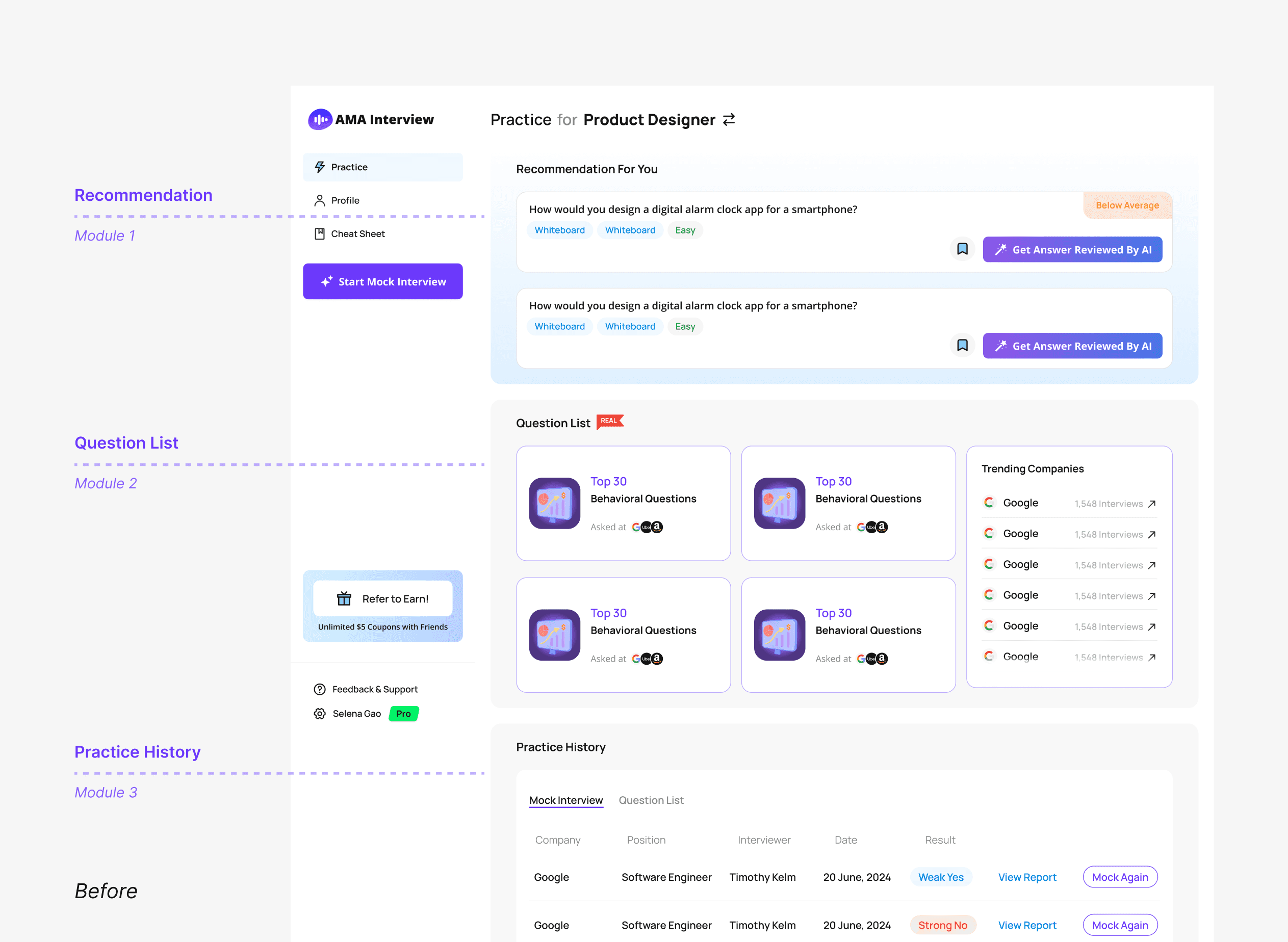
The Real Problem — Fragmented Commitment
The product didn’t lack features.
It lacked a dominant first action.
multiple equally weighted starting points
commitment hesitation
activation bottleneck
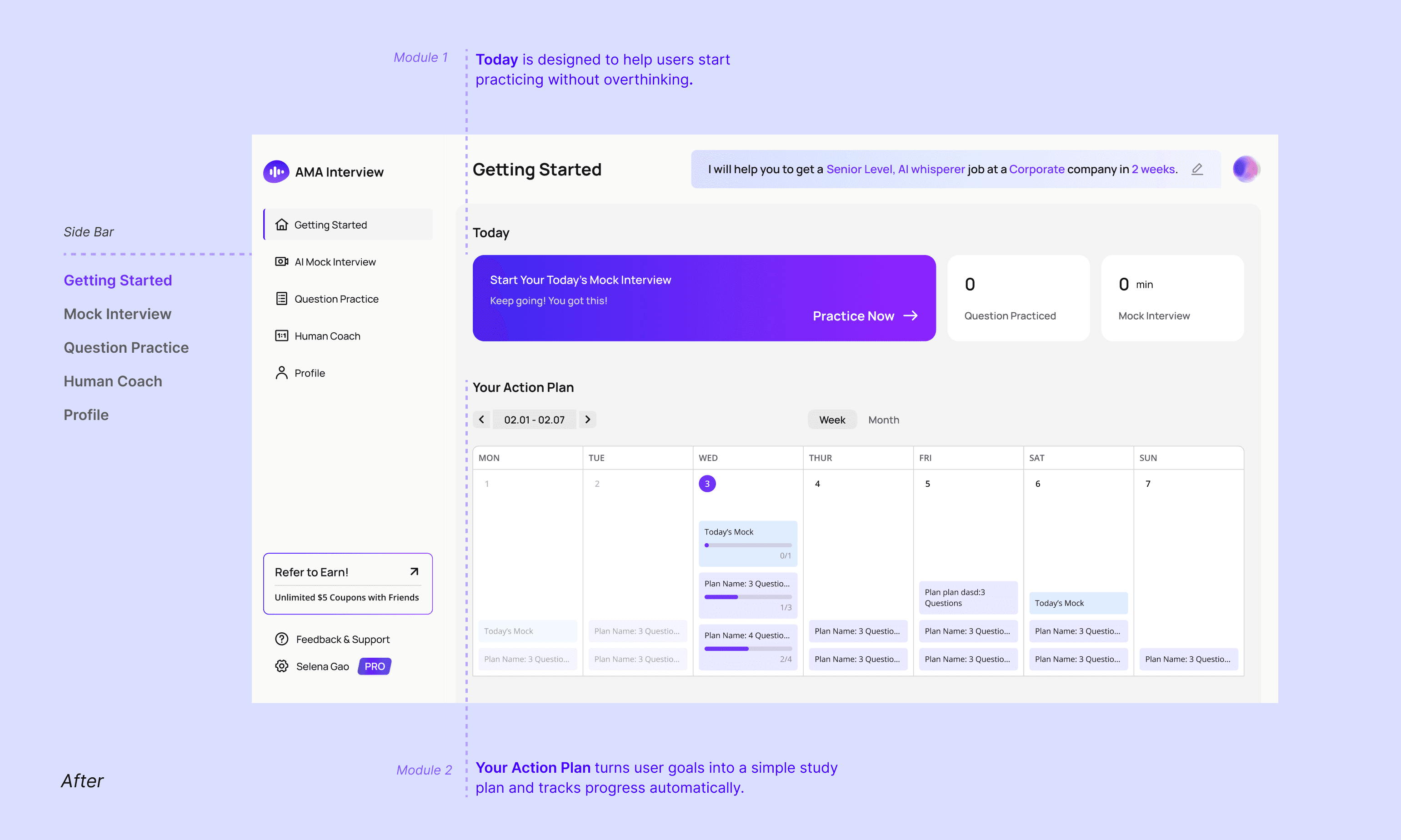
Strategic Decision — From Exploration to Activation
Growth wasn’t limited by feature value.
it was constrained by commitment sequencing.
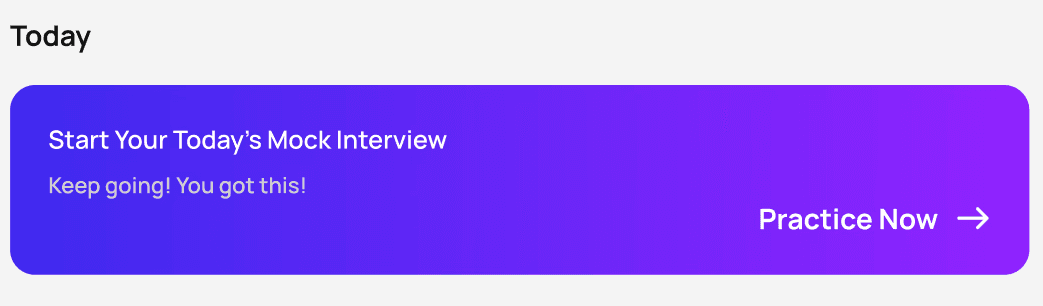
We intentionally chose the highest-commitment action—starting a mock interview—as the entry point. This was a risky decision.
It asked users to act before fully exploring the product.
It could discourage cautious or undecided users.
But the upside was compelling:
Mock interviews already drove the most meaningful engagement.
They made the product’s purpose immediately clear.
They dramatically shortened time-to-value.
We decided to optimize for clarity over comfort.
Core Solution — A Guided, Task-First Entry
To support this decision, we introduced a dedicated Getting Started experience. Instead of exposing all capabilities upfront, the product now guides users toward a single, high-value action:start a mock interview.
Key changes included:
Removing feature-level choices from the entry moment
Framing the experience around action rather than exploration
Aligning the first interaction with real usage patterns
This reduced cognitive load and let users experience value before making further decisions.
Post-Activation Support — Why Study Plan Came Second
Instead of positioning Study Plan as an equal starting point, we repositioned it as a post-activation support system.Mock interviews became the dominant first action, while Study Plan helped users sustain momentum after commitment. Growth required focus. Retention required structure.
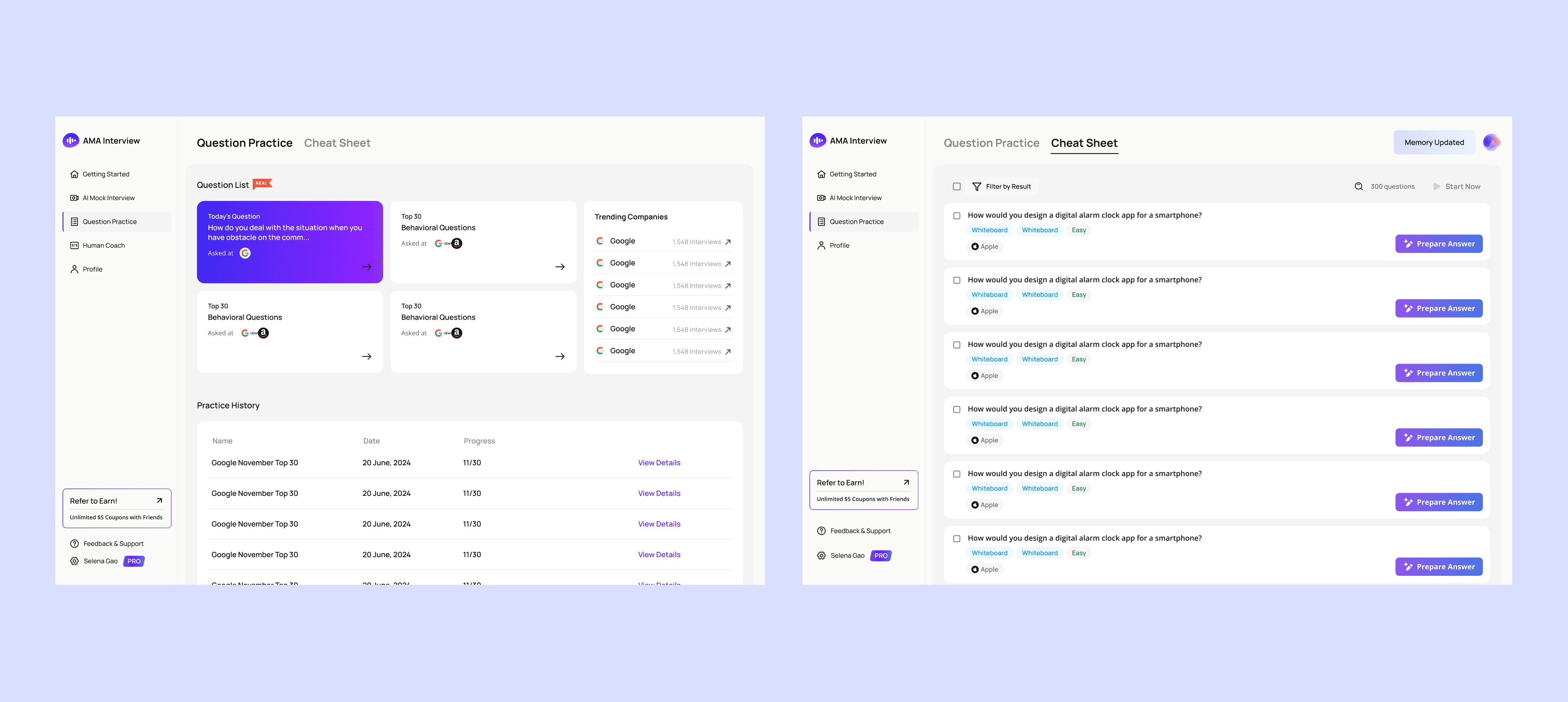
Navigation After Activation
Once users understood where to start and how to continue, we reorganized the rest of the product around clear, intent-based destinations:
Question Practice
AI Mock Interviews
1:1 Human Coaching
This structure preserved flexibility for advanced users while keeping navigation predictable and easy to scan.