Restructuring Product Architecture to Unlock Growth
Role
Founding Product Designer
Company
Spotly (Previous AMA Career)
Project Timeline
4 weeks
Contribution
Product strategy, UX architecture, UI
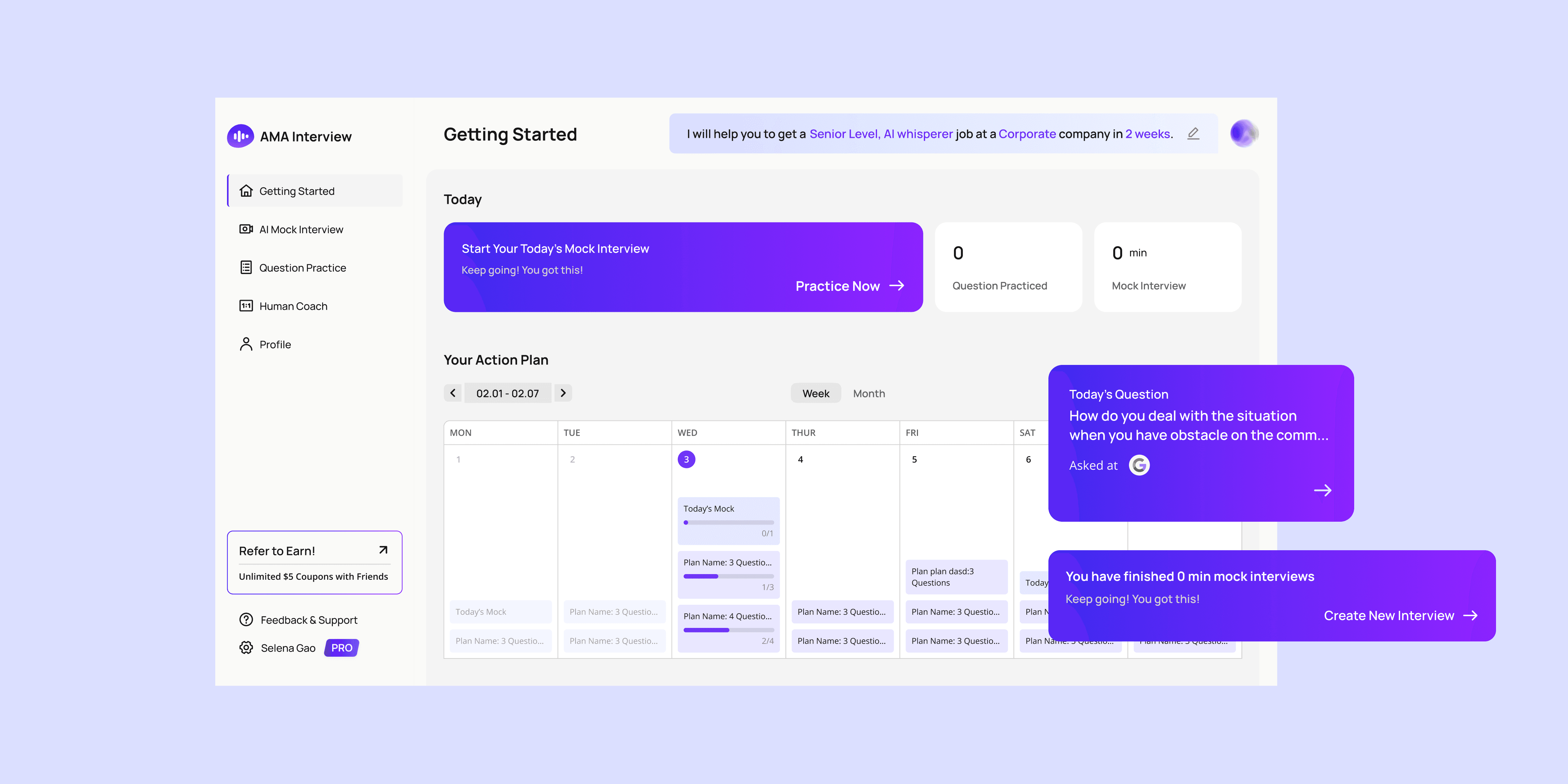
The Growth Plateau: Why Value Wasn't Converting
AMA Interview is an AI-powered platform for mock interviews and coaching. While the product offered high-value features, we hit a structural bottleneck: traffic was stable, but paid conversion had plateaued at 2.9%. This indicated a structural inefficiency in the growth funnel that simple UI tweaks could not solve.
Outcome & Impact — Quick View
By re-engineering the information architecture, we transformed the product from a feature-heavy toolbox into a task-oriented path. This led to a significant breakthrough in business metrics
Activation ↑
Mock Completion Rate: 35% → 60%+
Time to First Mock reduced by 45%
Monetization ↑
+58% Paid Conversion: from 2.9% to 4.59%.
Peak Daily Conversion: 11.11%
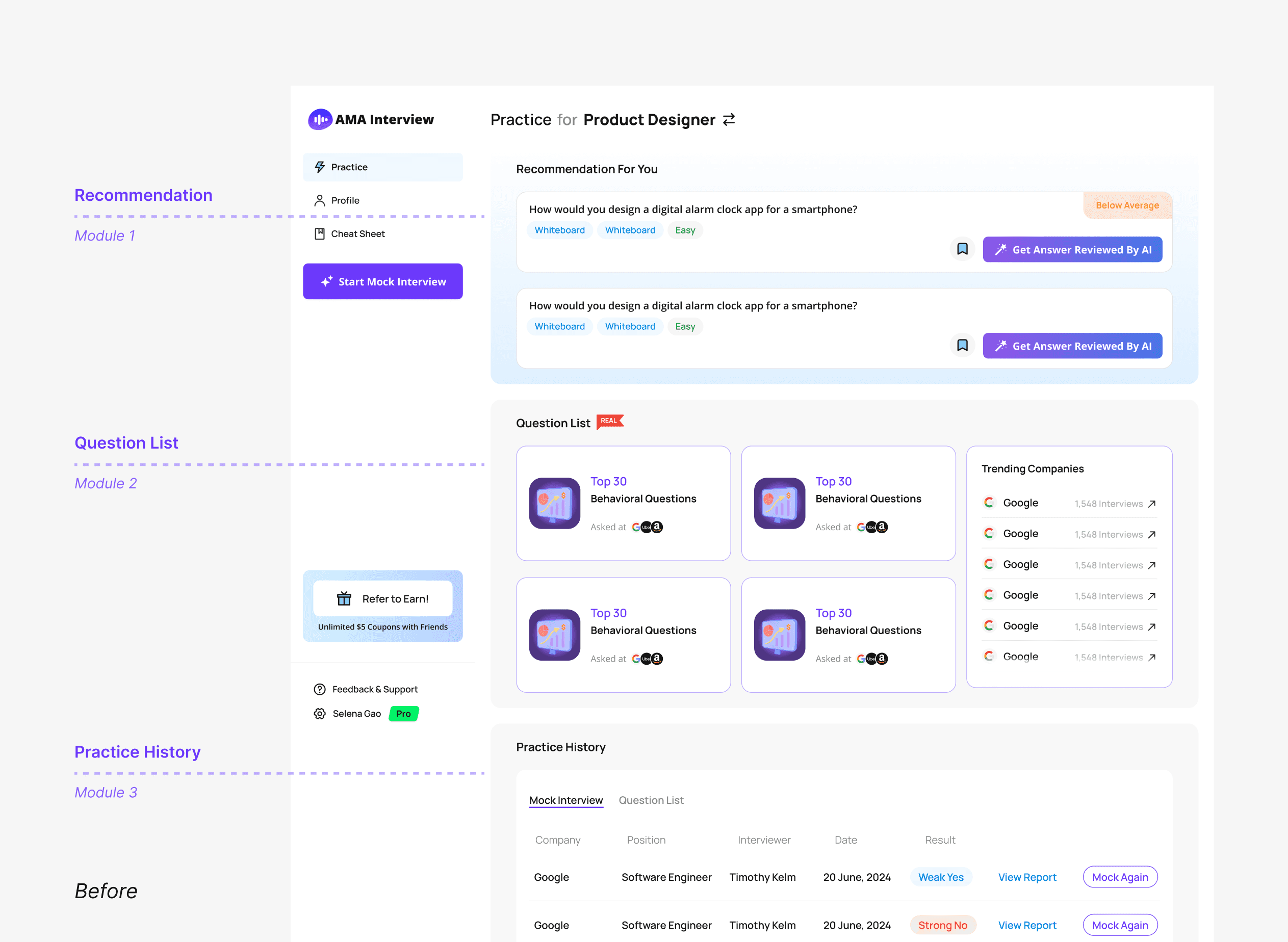
Diagnosis: The "Fragmented Commitment" Problem
Existing behavior data showed a "Paradox of Choice". While interaction was spread across modules, user commitment remained low
• The Signal: Interestingly, 35% of users were independently navigating to "Mock Interview" from the sidebar, identifying it as the core value.
• The Product Flaw: The product didn't lack features; it lacked a Dominant First Action. Multiple equally weighted starting points led to "commitment hesitation" and an activation bottleneck.
Strategic Pivot: Trading Comfort for Clarity
I led a high-stakes decision to move from an Exploration-led experience to an Activation-led journey.
• The Trade-off: We intentionally chose the highest-commitment action—starting a mock interview—as the primary entry point.
• The Rationale: While asking for action before exploration was risky, it dramatically shortened Time-to-Value (TTV). We decided to optimize for clarity over comfort, ensuring users experienced the product's "Aha! Moment" immediately.
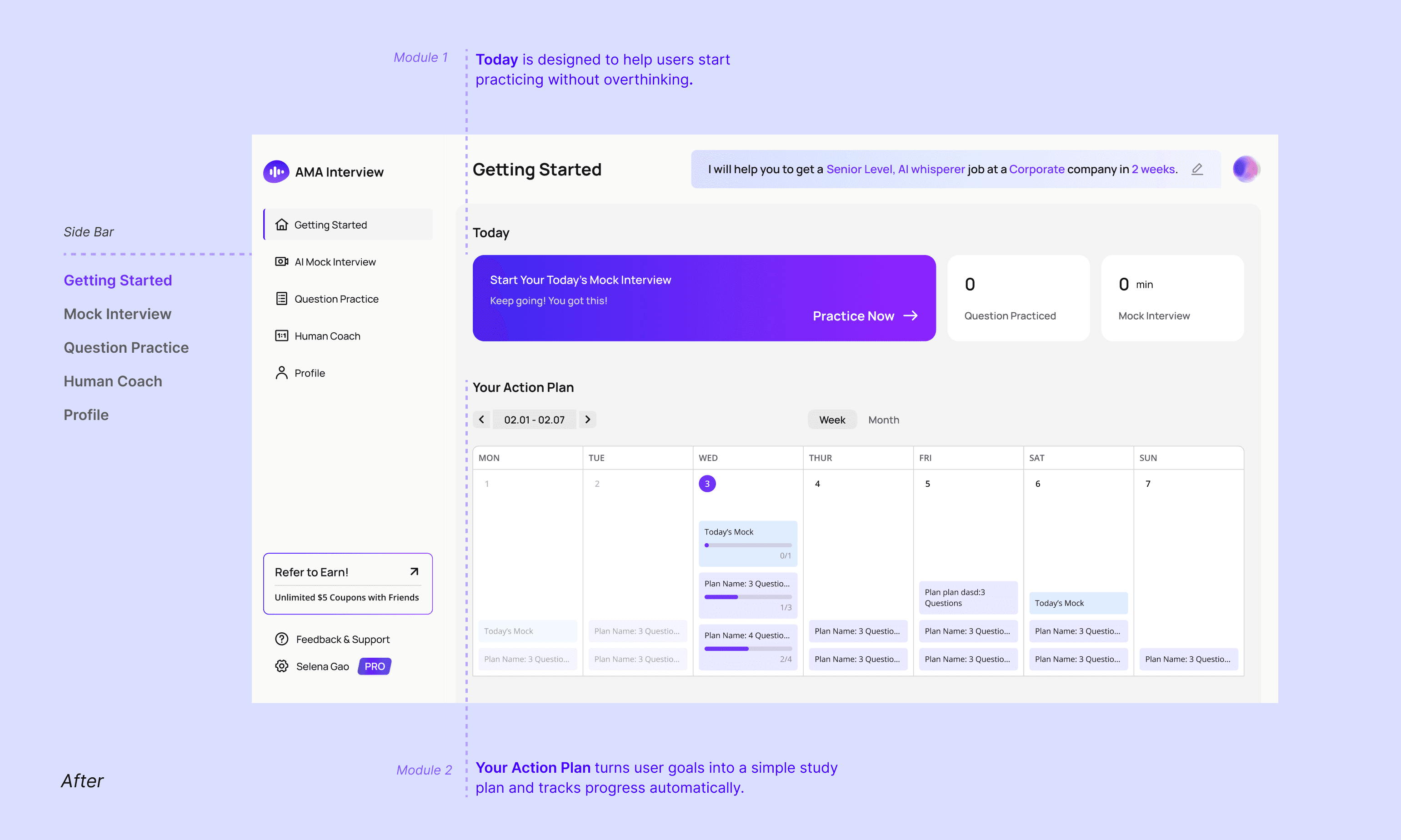
Solution: A Guided, Task-First Ecosystem
I restructured the Information Architecture (IA) to create a focused, linear onboarding journey.
• Removing Noise: We eliminated feature-level choices from the initial entry moment.
• Action-Oriented Onboarding: The new "Getting Started" experience guides users toward a single, high-value mock interview.
• Psychological Sequencing (The Study Plan): I repositioned the Study Plan as a post-activation support system. Once users completed a mock and identified gaps, their motivation to commit to a plan was significantly higher.
• Intent-Based Destinations: Once activated, the rest of the product (Human Coaching, Question Practice) was reorganized around clear destinations to keep the navigation predictable and easy to scan.
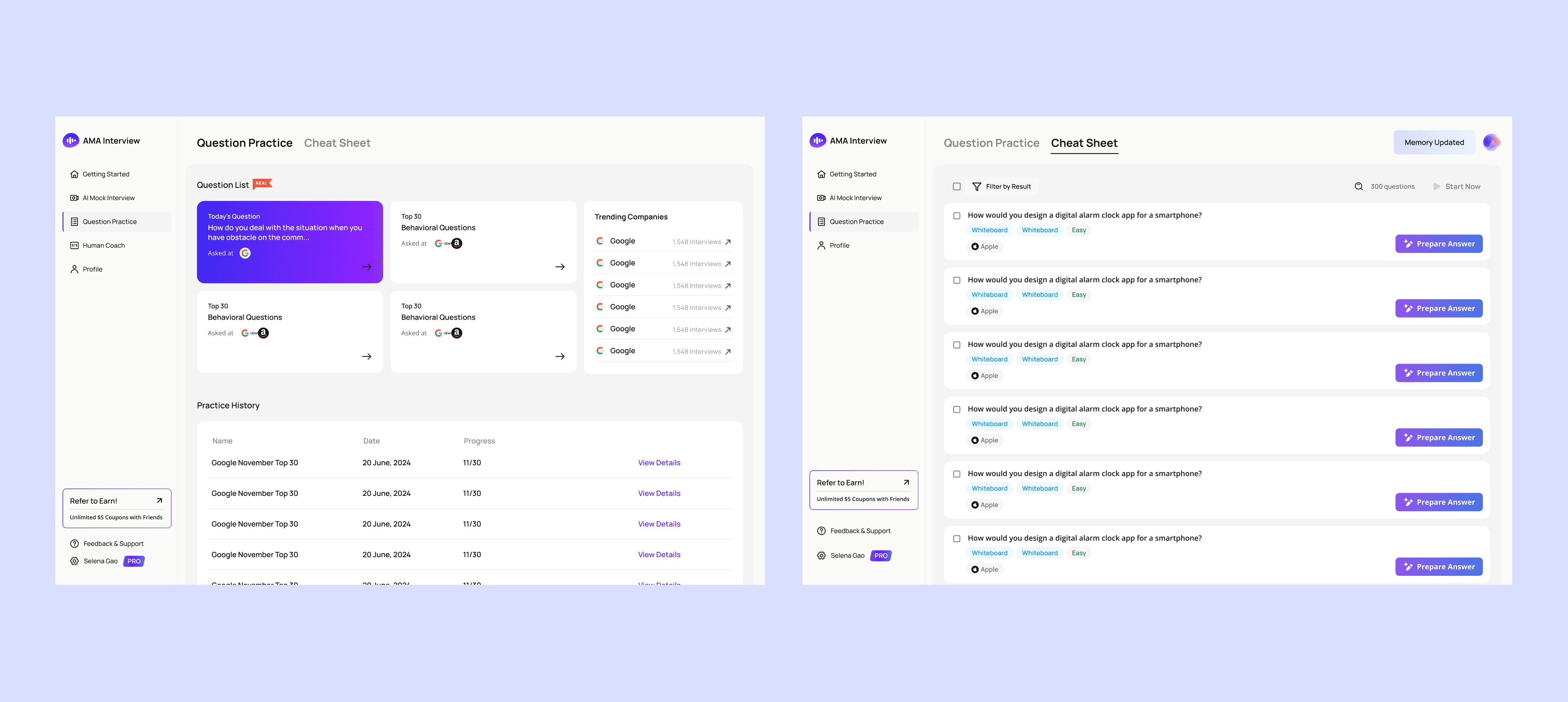
Reflection: Designing for the Funnel
This project proved that UX is not just about making things easy to use, but about making the right actions inevitable. By aligning the product's structure with the user's highest intent, we successfully unlocked a new tier of business growth.