Streamlining Restaurant Reservations for Efficiency
Redesigned the core experience in Trufl Partner v3.0 to help hosts book faster, with fewer errors, under real front-of-house pressure.
Role
UX/UI Design Intern
Company
Trufl Hospitality
Platform
iPadOS
Contribution
User Research, UX, UI
Project Overview
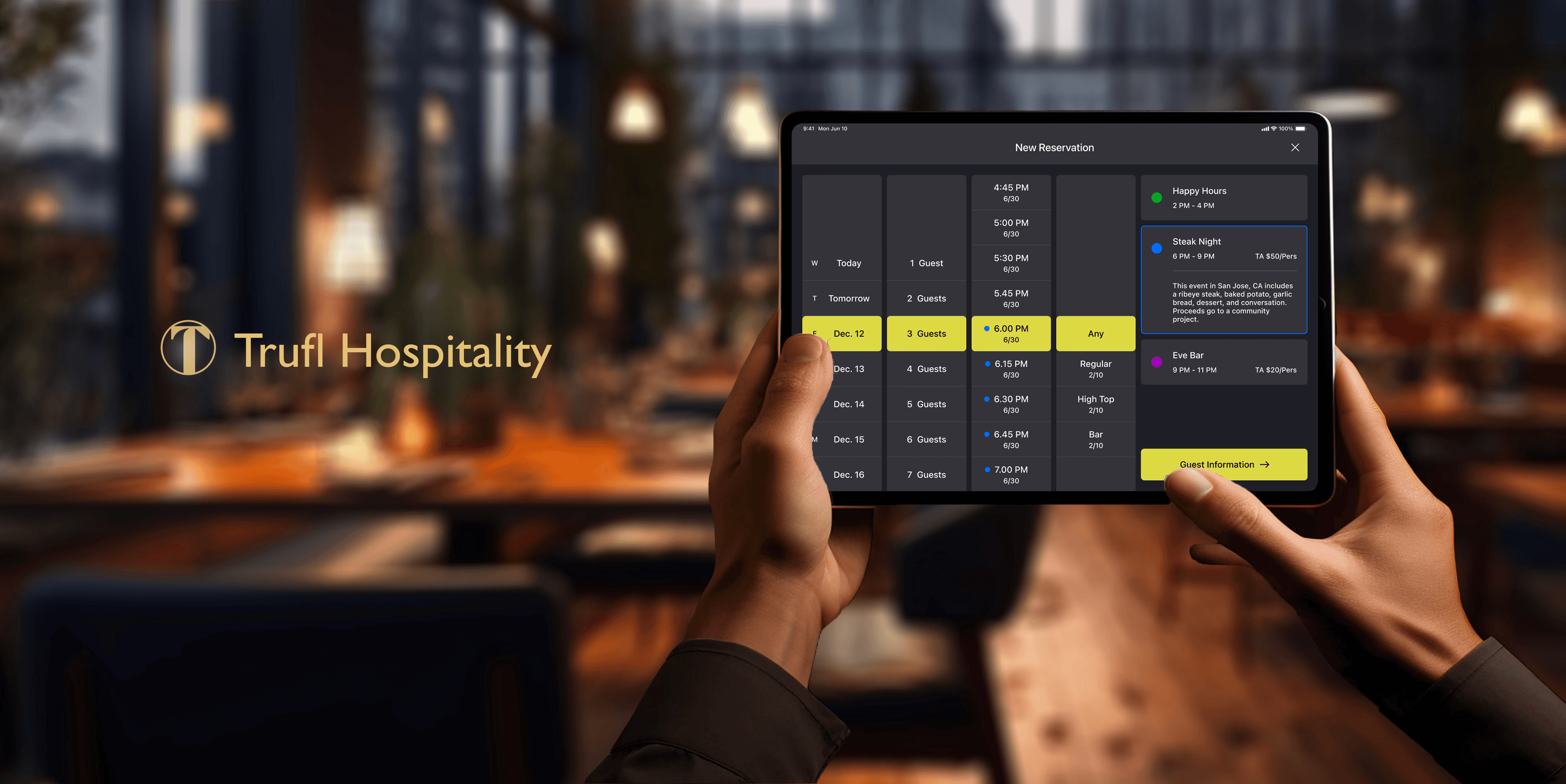
Dinner rush hasn’t started yet—but it’s coming. The host stands at the iPad, juggling incoming reservations, phone calls, and walk-ins.
This project focused on redesigning the Add New Reservation experience in the Trufl Partner V3.0 app on iPadOS to support hosts when pressure is getting higher.
Outcome & Impact — Quick View
Task success rate 70% → 96%
Improved core flows of Add New Reservation.
Peak-Hour Ready Operations
Reduced friction for front-of-house staff during high-pressure service.
30+ Production-ready Interfaces
Designed and delivered across Trufl Partner v3.0 on iPadOS
v3.0 Shipped, Live in Production
Used daily by restaurant managers and hosts
Key Problem
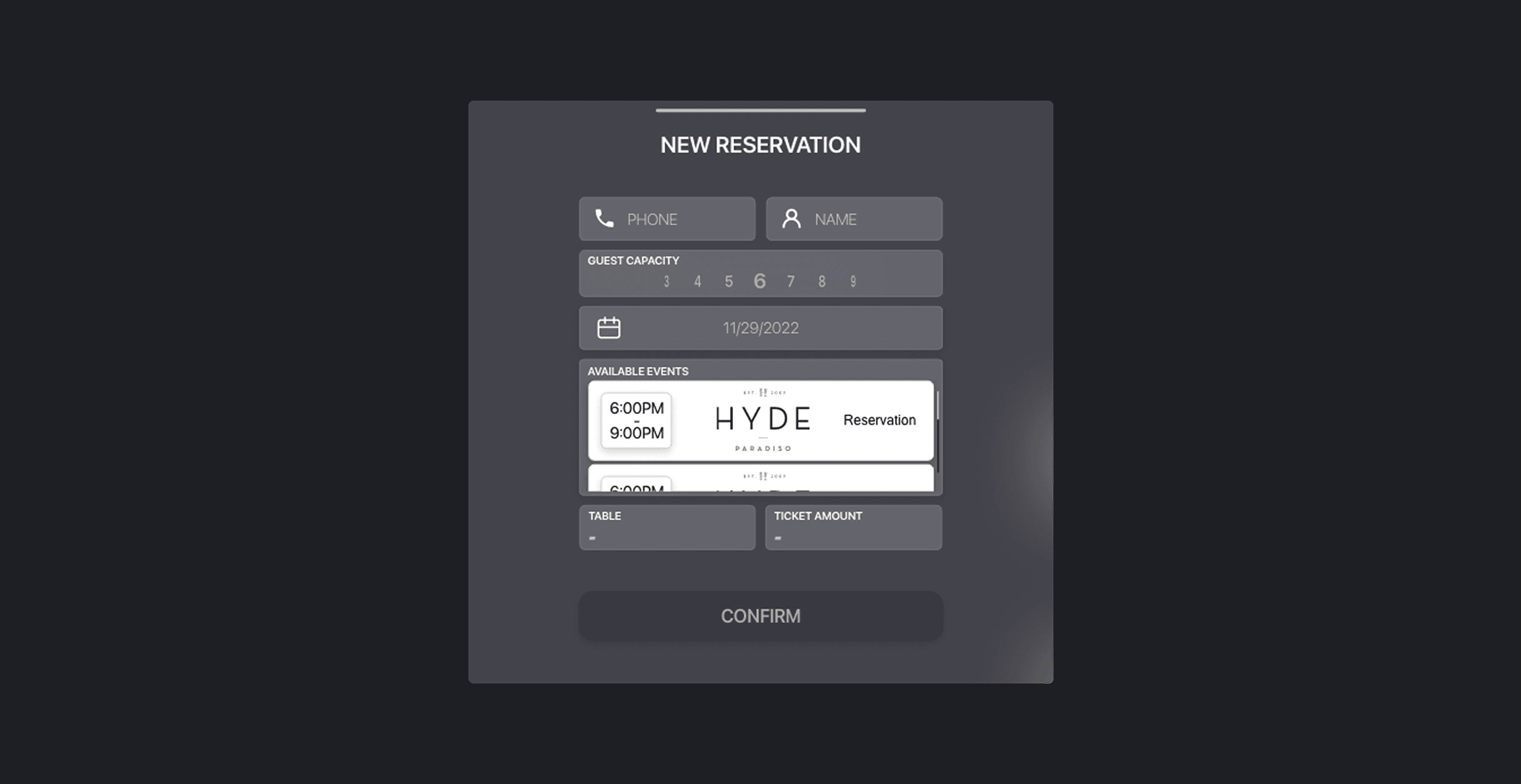
One overloaded screen failed under pressure.
The original design compressed all reservation steps into a single screen—creating information overload, no real-time feedback, high mis-tap rates, and low task success under pressure.
Decision 0 — The Foundational Shift
Replace a single overloaded screen with a step-by-step workflow.
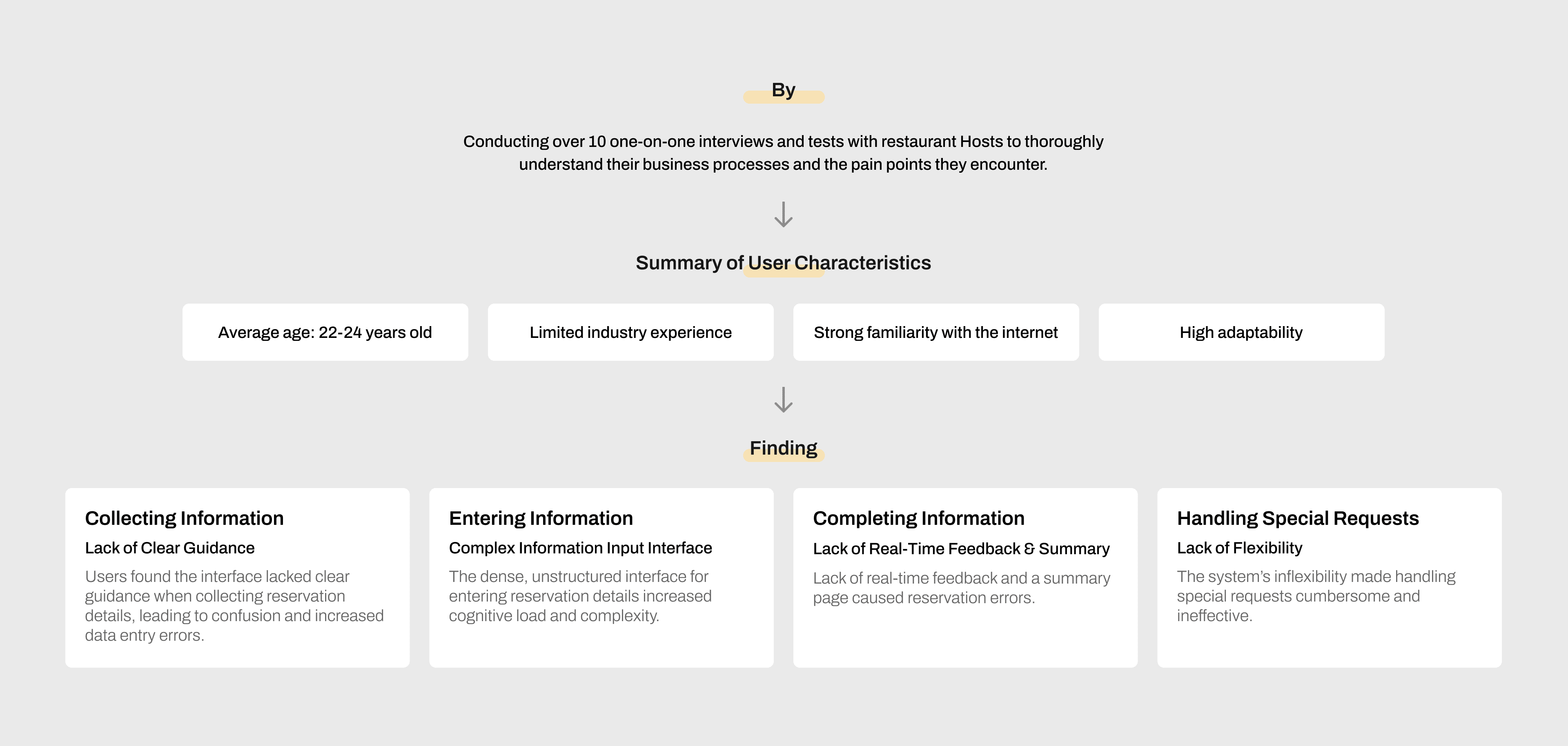
From 10+ 1:1 interviews and on-site observation, we saw hosts don’t complete reservations as “one form fill.”
They work in micro-steps—collect → enter → verify → handle special requests—while constantly switching attention during peak hours.
Key breakdowns in the original one-screen design:
• Information overload increased cognitive load and mis-taps
• No real-time feedback led to uncertainty and errors
• No flexible space for special requests made personalization unreliable
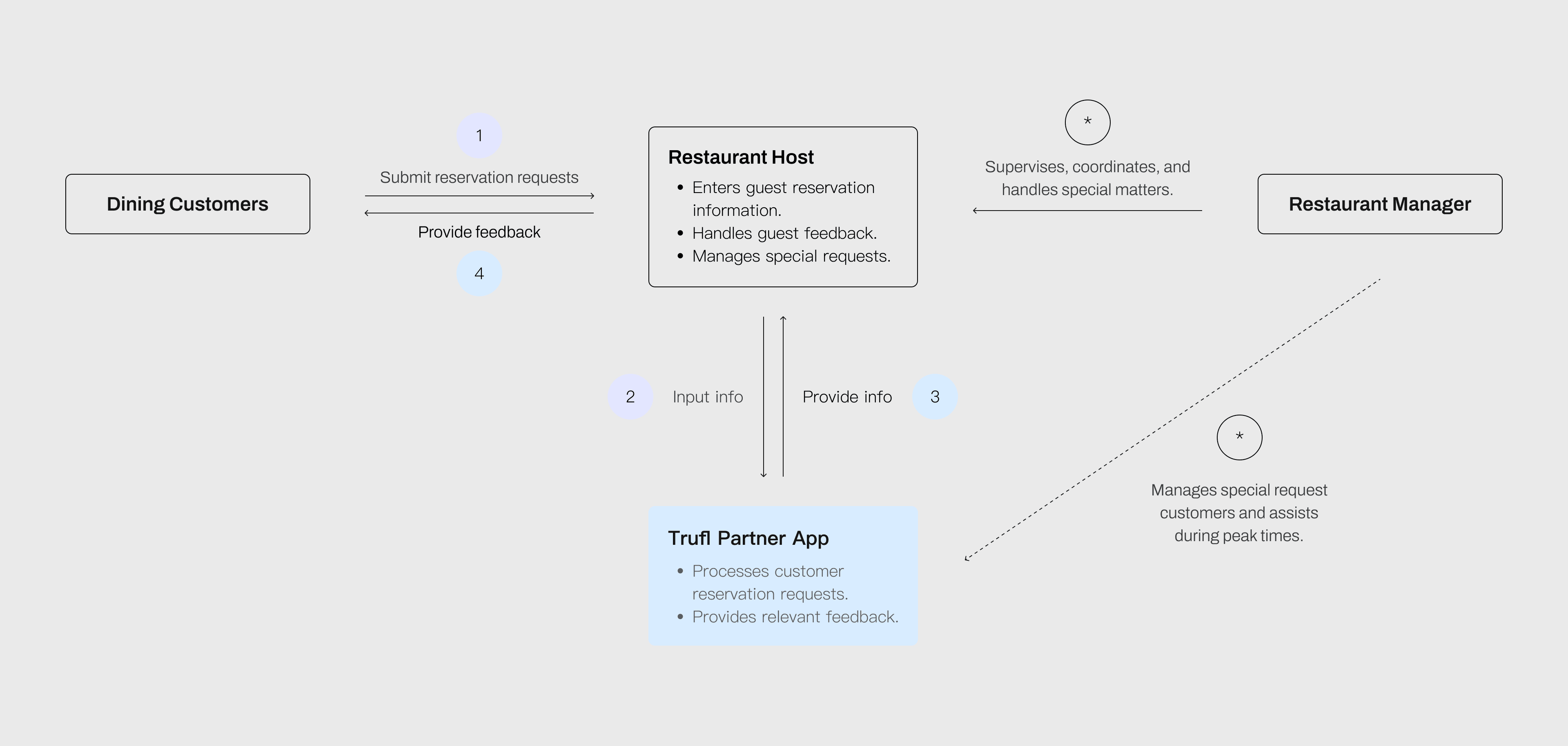
This decision reframed the product from a “single-screen form” into a decision-support flow:
• Progressive disclosure reduces cognitive load
• Inline verification adds real-time confidence
• Dedicated space for special requests supports real service workflows
Decision 1: Replace a single overloaded screen with a guided, step-by-step flow
WHAT WE REDESIGNED
We restructured the experience into a step-by-step workflow, starting with reservation intent:
• Date, time, party size, and event selection are grouped and visually prioritized
• Event details are revealed dynamically for real-time context
• Clear selection states confirm decisions before moving forward
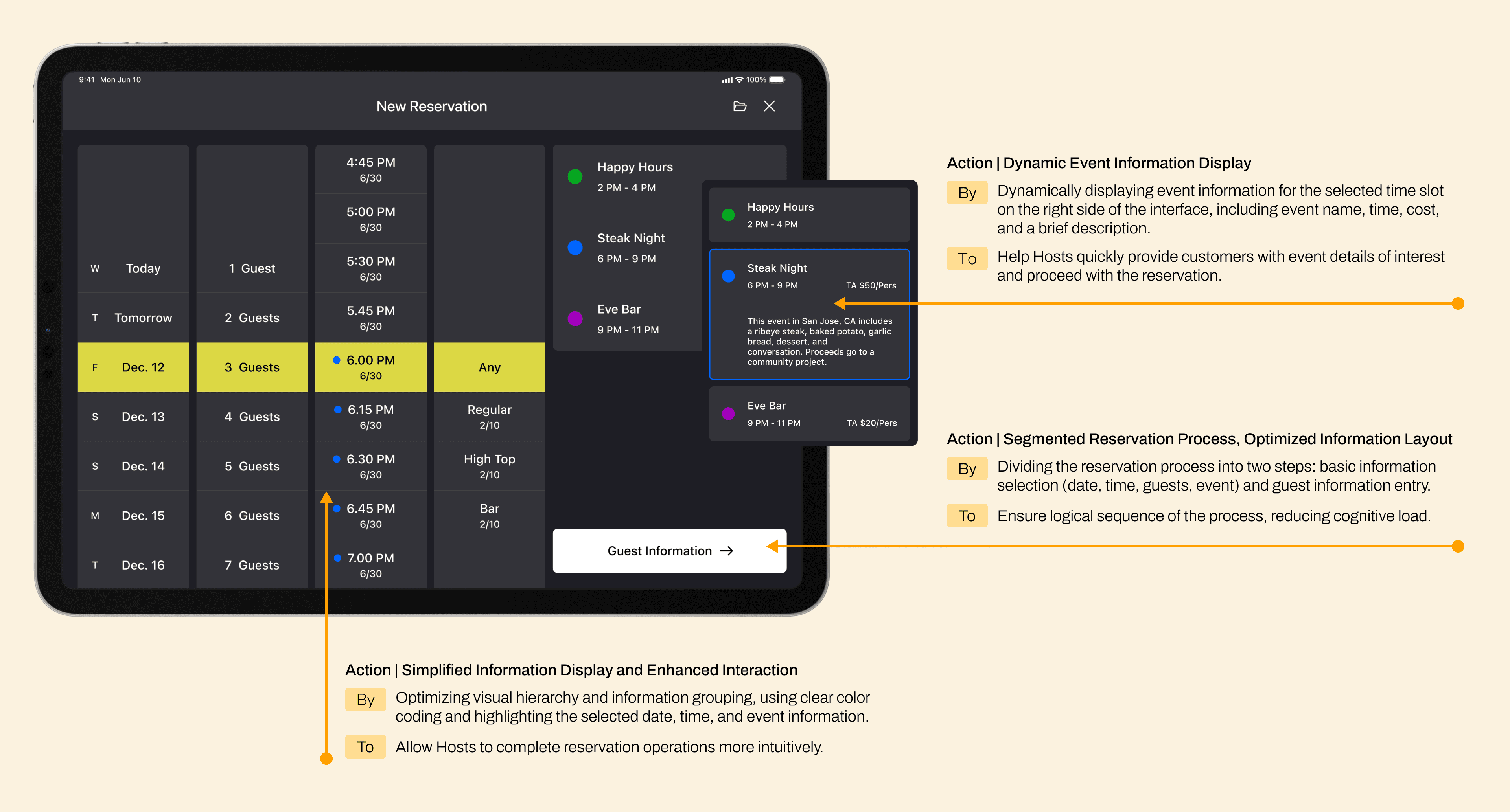
By aligning the interface with the host’s natural decision sequence, the flow reduced cognitive load and enabled faster, more accurate reservation setup during rush hours.
Decision 2: Design guest search and verification for accuracy under pressure
WHAT WE REDESIGNED
We optimized guest selection to be fast, accurate, and verifiable:
• Search and auto-fill reduce manual input
• VIP visual indicators surface high-priority customers instantly
• A real-time summary panel allows continuous verification of reservation details
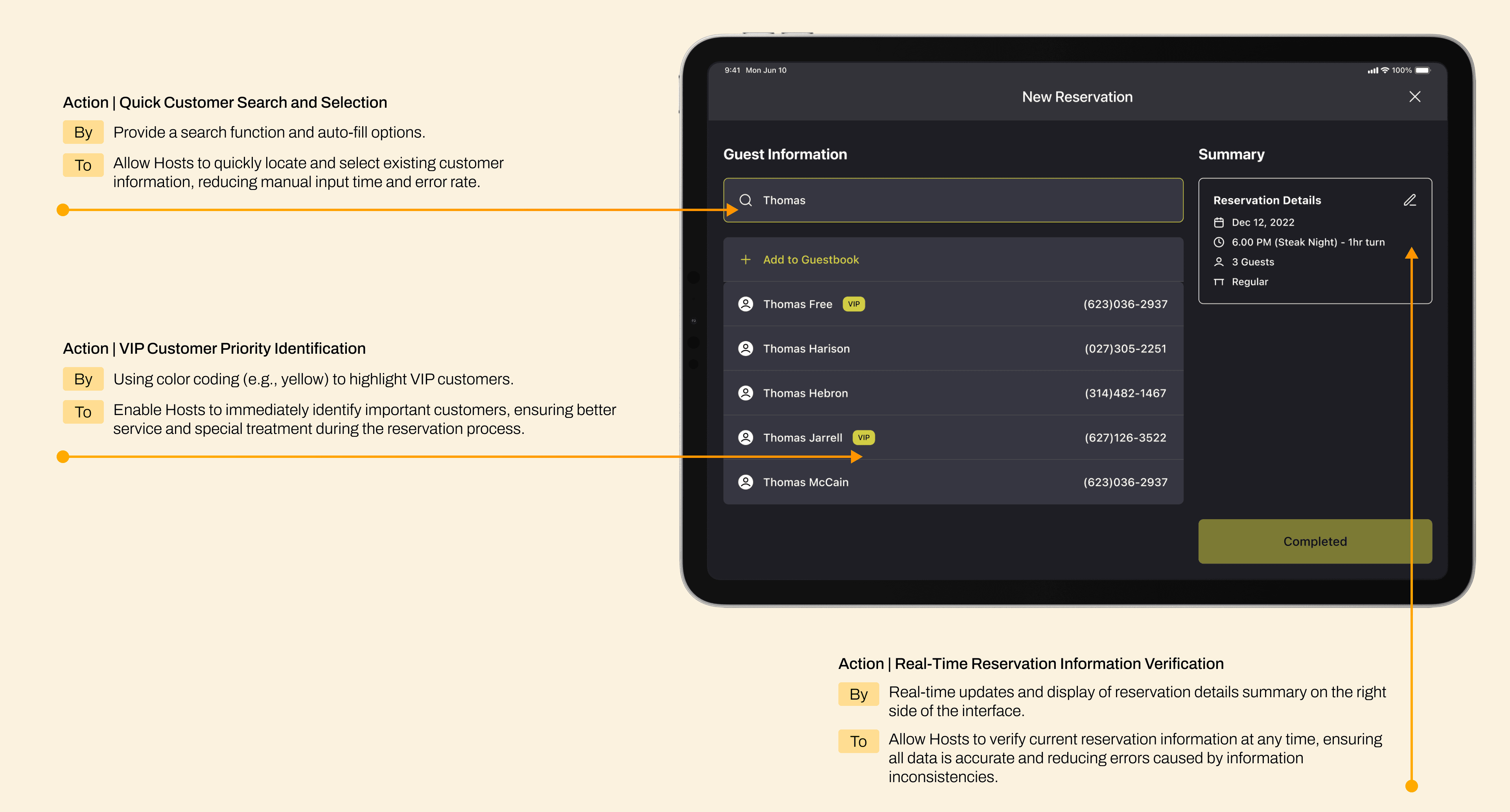
Hosts can confidently identify the correct guest without second-guessing, reducing errors while maintaining speed during peak operations.
Decision 3: Make guest context and special requests first-class, actionable data
WHAT WE REDESIGNED
We introduced a dedicated guest information step that centralizes context:
• Structured capture of special requests and visit notes
• Guestbook notes surface preferences and restrictions
• Payment information and visit history support continuity and trust
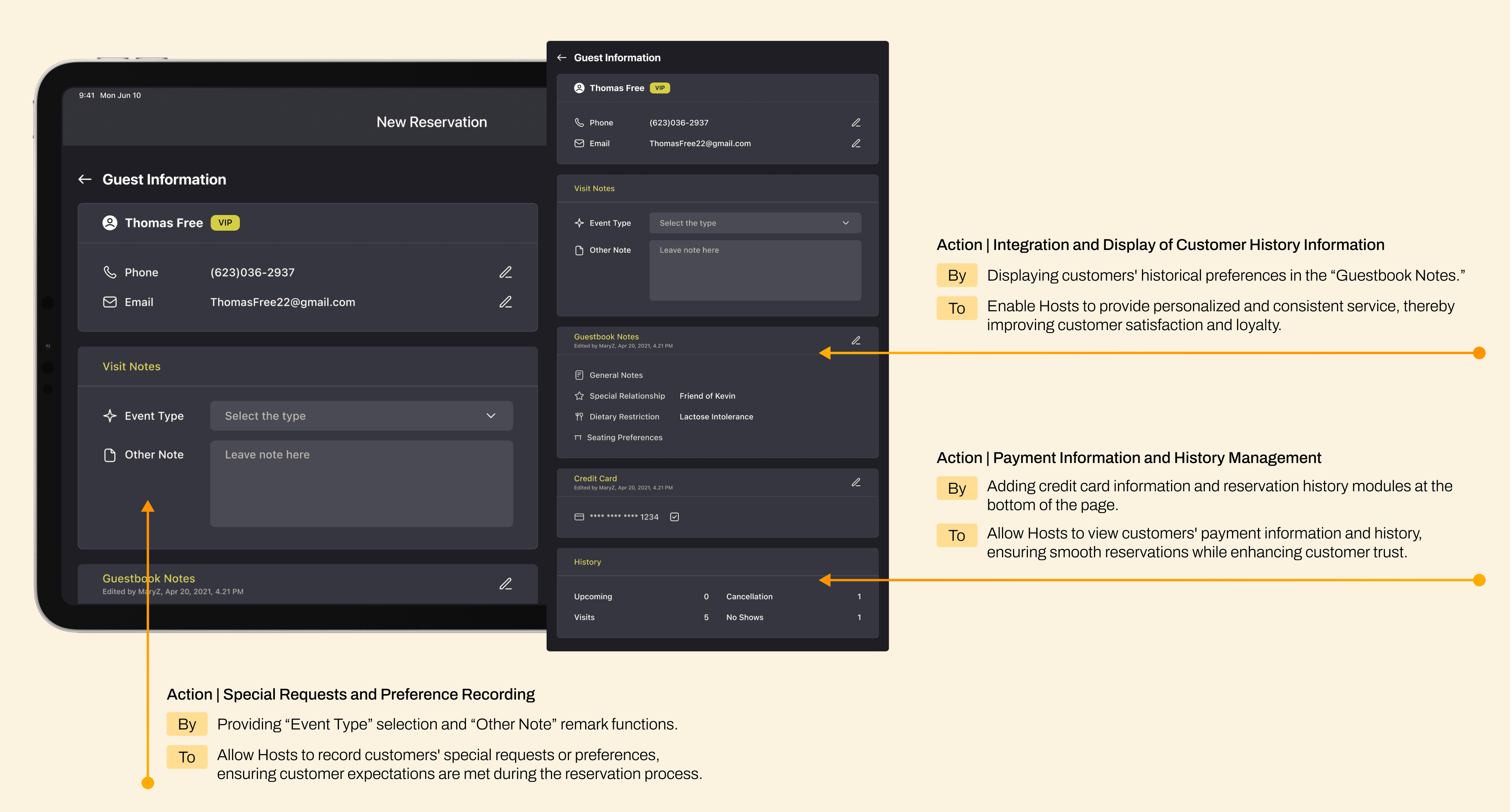
Personalized service became consistent and repeatable, no longer relying on staff memory—especially important in high-turnover, high-pressure environments.